Black Mold?
Don't Take Chances! Call the Top Black
Removal Company in Secaucus and get cleaned up FAST!



Why Choose Us?
- Certified Pros
- Available 24/7/365
- Rapid Response
- Fully Licensed And Insured
- We Work With Your Insurance Company
Call Now (201) 485-3430
Professional Mold Removal in Secaucus, NJ
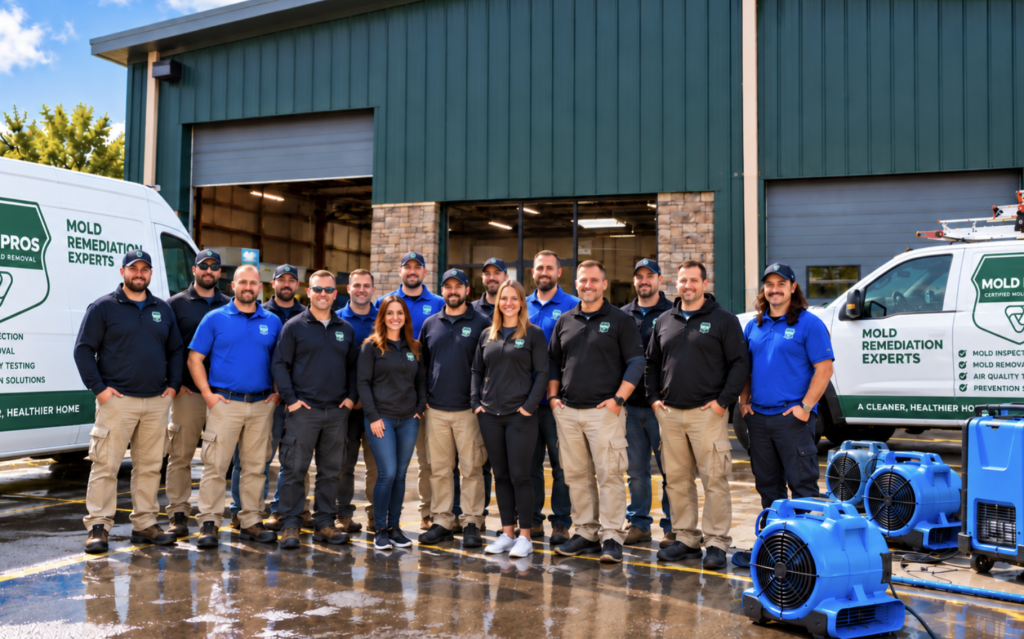
Mold cleanup needs more than wiping a visible spot. We find the moisture conditions, protect unaffected areas, and clean suitable surfaces and remove materials that cannot be safely restored. Our team serves homes and businesses in Secaucus, New Jersey, including apartments, condos, offices, schools, and retail properties. We are IICRC certified and BBB Registered. The work is organized around controlling the source, limiting dust, and leaving the affected area ready for the next repair step.
What Happens During Mold Remediation in Secaucus?
We begin by reviewing what you noticed and where moisture entered the building. Common causes include roof leaks, plumbing leaks, appliance leaks, poor bathroom ventilation, and condensation on cold surfaces. A slow leak inside a wall can affect drywall and framing before the damage becomes easy to see. We also look for damp materials around basements, attics, HVAC equipment, windows, and doors.
Before cleaning begins, we establish the work area and protect nearby surfaces. Containment means using plastic walls or barriers to keep mold dust from spreading into clean rooms. We use personal protective equipment and HEPA filtration during dusty work. A HEPA air scrubber filters fine particles from the air while affected materials are handled.
Source control comes before final cleaning. We help identify the moisture condition that supports the growth, but separate repair professionals handle plumbing, roofing, HVAC, and reconstruction. Active water should be stopped before porous materials are removed. Drying and source correction reduce the chance that cleaned areas become damp again.
What’s Included in Mold Cleanup?
Our work focuses on safe removal, detailed cleaning, and protection of unaffected parts of the property. The exact scope follows the affected materials, work-area size, access, and moisture source. Services may apply to a single room, a wall section, an attic, or a larger commercial work area. We keep the work area separated so routine activity can continue in other parts of the building when the scope allows.
- Containment barriers and protection for nearby finished surfaces.
- HEPA air filtration and controlled handling of mold-affected dust.
- Cleaning of suitable hard surfaces and removal of damaged porous materials.
Drywall, carpet, insulation, and other porous materials soak up water and often require careful removal when affected. Wood framing and subflooring need a closer look because their condition varies with depth, moisture, and access. Concrete is porous, so it can hold moisture even though it is not treated like drywall. Glazed tile has a less absorbent surface, but grout and nearby materials still require attention.
Attics and crawl spaces often require extra care because access is limited and airflow is different. We protect paths into the work area and contain debris during removal. Commercial properties also need planning around offices, classrooms, patient areas, retail spaces, or shared hallways. The work plan should keep building occupants away from active cleanup areas.
What’s Not Included?
Mold remediation does not replace the trade work that caused or follows the moisture problem. Separate repair professionals handle plumbing, roofing, HVAC, and reconstruction. We do not rebuild walls, replace roofs, repair leaking pipes, or install new HVAC equipment. Those repairs should follow cleanup when affected assemblies need to be opened or restored.
- Plumbing, roof, appliance, or HVAC repairs.
- Rebuilding drywall, flooring, ceilings, cabinets, or finished surfaces.
- Independent mold testing or laboratory analysis.
We do not perform mold testing. Independent testing or assessment can help when the extent or type of a problem needs separate documentation. Color alone does not identify a mold species, including what people commonly call black mold. Cleaning and removal decisions should be based on moisture, material condition, and the affected area rather than color.
How Do Cleaning and Material Removal Differ?
Cleaning is used for materials that can be safely restored after the moisture source is controlled. Removal is used when a porous material has absorbed moisture or has damage that cleaning cannot address. Drywall, insulation, carpet, and some subfloor materials often fall into the removal category. Hard surfaces such as glazed tile and certain finished areas may be cleaned when their condition allows.
Concrete and wood are porous, so neither should be treated as automatically unaffected. Concrete may retain moisture in pores, while wood can hold moisture below its surface or inside framing joints. We use controlled removal and cleaning methods suited to the material. Painting over visible growth does not correct the moisture source or remove affected material.
How Do We Protect Your Property During the Work?
Containment separates the work zone from clean areas and helps limit the movement of dust. We use protective coverings, controlled entry, and HEPA filtration during removal and cleaning. Tools, debris, and affected materials are managed within the work area. These steps matter in occupied homes and businesses where clean rooms need protection.
Occupants should stay out of active work areas during removal and detailed cleaning. Whether the entire property needs to be vacant depends on the size, location, materials, and access involved. Small isolated work areas differ from a large commercial space with shared air paths. We organize the work around the affected zone and the building’s normal use.
What Does Mold Remediation Cost?
Actual mold remediation costs vary based on affected materials, work-area size, containment needs, access, and the moisture source. A final scope and price require an inspection of the affected area. Removing a small section of drywall is different from cleaning an attic, crawl space, commercial suite, or subfloor system. Hidden moisture and difficult access also affect the amount of labor and protection required.
You can help the evaluation by taking photographs of visible damage and noting when the problem began. Do not disturb suspected mold or paint over it before the work area is reviewed. If water is still entering, stop the water when it is safe and contact the trade responsible for the leak. Keeping the area dry and limiting traffic helps reduce additional spread.
When you are ready to arrange mold cleanup, call (201) 485-3430. We will discuss what you noticed, where moisture is present, and which parts of the property are affected. We can then plan the inspection and explain the likely cleanup or removal scope. Please keep people and pets away from visibly affected areas until they are reviewed. If active water is present, shut it off when safe and address the source before cleanup begins.
Our mold warning signs page explains what to look for before arranging service.
Frequently Asked Questions
Can you remove mold from drywall and insulation?
Drywall and insulation are porous, so affected sections often require removal rather than surface cleaning. We isolate the work area before cutting, handling, and containing those materials. The amount removed depends on visible damage, moisture spread, and access inside the assembly. Reconstruction after removal is handled by separate repair professionals.
Is black mold more dangerous because of its color?
Color alone does not identify a mold species. The term black mold is commonly used for dark-looking growth, but appearance cannot confirm what it is. We focus on moisture control, containment, cleaning, and removal of affected materials. Health questions should be directed to a doctor or public-health professional.
Can mold return after cleanup?
Mold can return when moisture remains or a new leak develops. Roof leaks, plumbing leaks, condensation, poor ventilation, and appliance leaks all need attention. We remove or clean affected materials, while separate repair professionals correct plumbing, roofing, HVAC, or reconstruction needs. Keeping bathrooms ventilated and drying wet materials quickly also helps protect the area.
What should I do before professional cleanup begins?
Keep people and pets away from the suspected work area. Do not scrape, sand, or paint over visible growth. Stop active water when it is safe, and avoid moving contaminated items through clean rooms. Photographs and notes about leaks or odors can help explain what happened during the initial review.